
Saraswathi Veena
More Than an Instrument, the Veena Is a Tradition
The veena is one of the world’s oldest classical instruments, with a history that spans over three millennia. Mentioned in ancient Indian texts such as the Rigveda and Natya Shastra, and depicted in temple sculptures and coins, the veena has evolved across centuries while retaining its sacred and musical significance.
To play the veena is to participate in a living tradition—one shaped by artisans, musicians, and generations of practice.
An Instrument That Resonates with the Human Body
The veena is uniquely designed to resonate not just acoustically, but physically. Its structure is often likened to the human body—its frets mirroring the spine, its strings reflecting vital energy pathways. Through breath control, posture, and sustained practice, the instrument becomes an extension of the player, aligning sound, movement, and inner focus into a deeply meditative experience .
This is why a well-made, well-balanced veena matters. It responds to the musician as much as the musician responds to it.

The Meaning Behind Every Detail
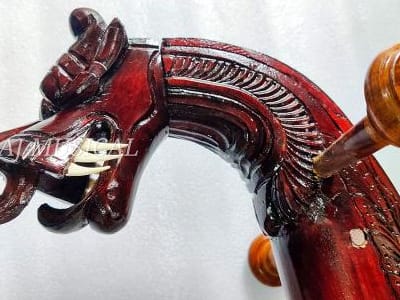
Traditional veenas are rich in symbolism. The carved Yali (or Yazhi) at the instrument’s head is not decorative—it is a guardian figure rooted in mythology, symbolising protection, balance, and the calming of inner chaos through music. According to legend, the Yali was tamed by the sound of the veena itself and was granted a place on the instrument so it could remain close to divine sound forever.
These details reflect the philosophy behind the veena: discipline, harmony, and reverence for sound.
Why Musicians Choose Medhavani
- Carefully curated veenas, not mass-selected instruments
- Emphasis on sound quality, balance, and long-term playability
- New and restored veenas chosen with equal care
- Artist-led evaluation, not purely commercial selection
- A trusted, one-stop destination for veena lovers